Transform Your Sporting Event With AI Fan Experiences
How stadiums and sporting events use AI photo and video activations to lift concourse engagement, put fans on the jumbotron, and reach the crowd watching from home.
Most sporting events already have the hardest part solved. You have thousands of people in one place, at peak emotion, with their phones out. What venues rarely have is something for those people to do in the ninety minutes before kickoff and the fifteen minutes of every intermission.
That gap is where fan experience budgets go to die: a step-and-repeat nobody queues for, a sponsor table handing out branded koozies, a mascot photo op with a twenty-minute line and no way to actually get the photo. The problem is not fan enthusiasm. It is that the activation gives fans nothing worth waiting for and gives the venue nothing measurable in return.
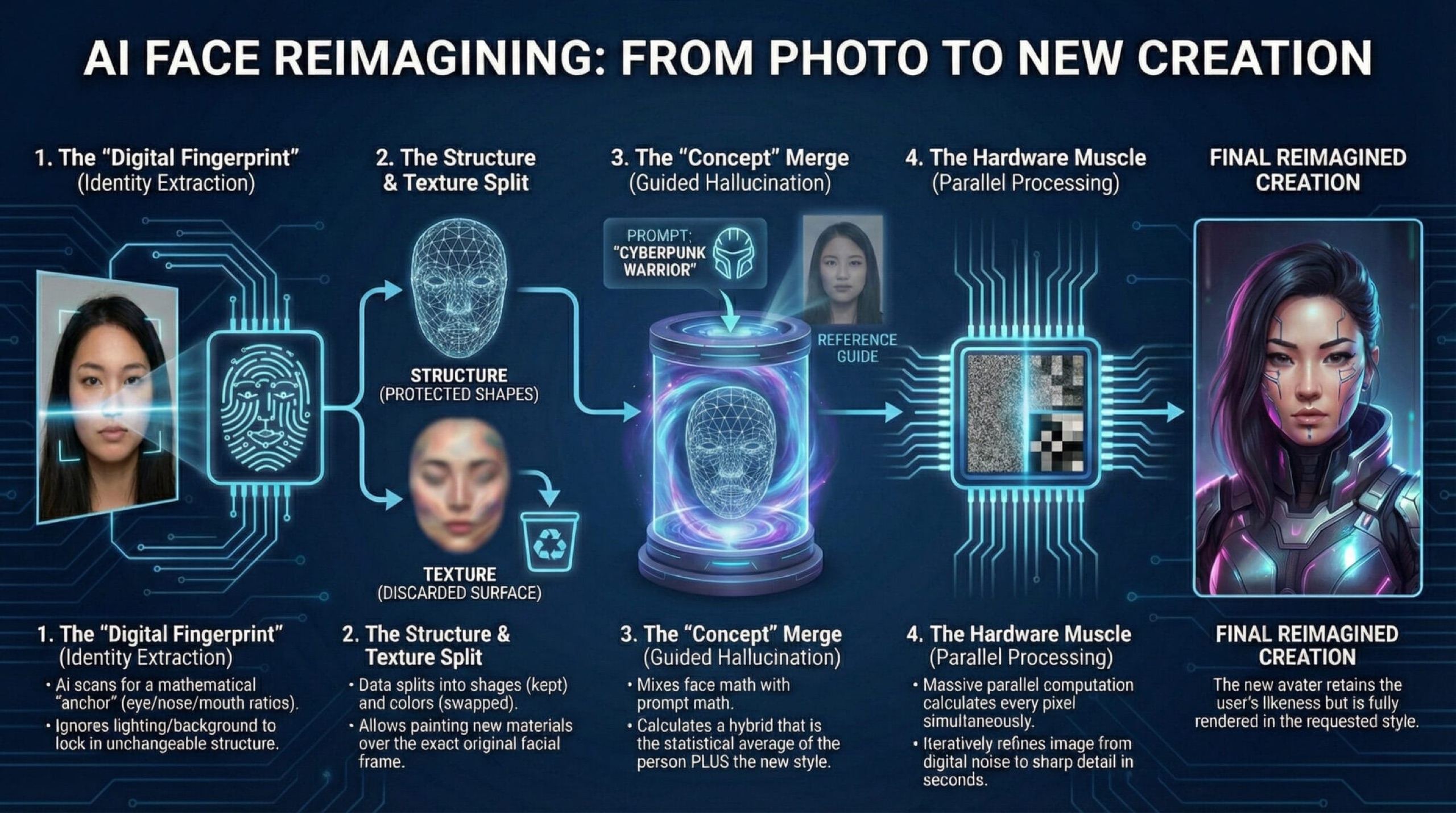
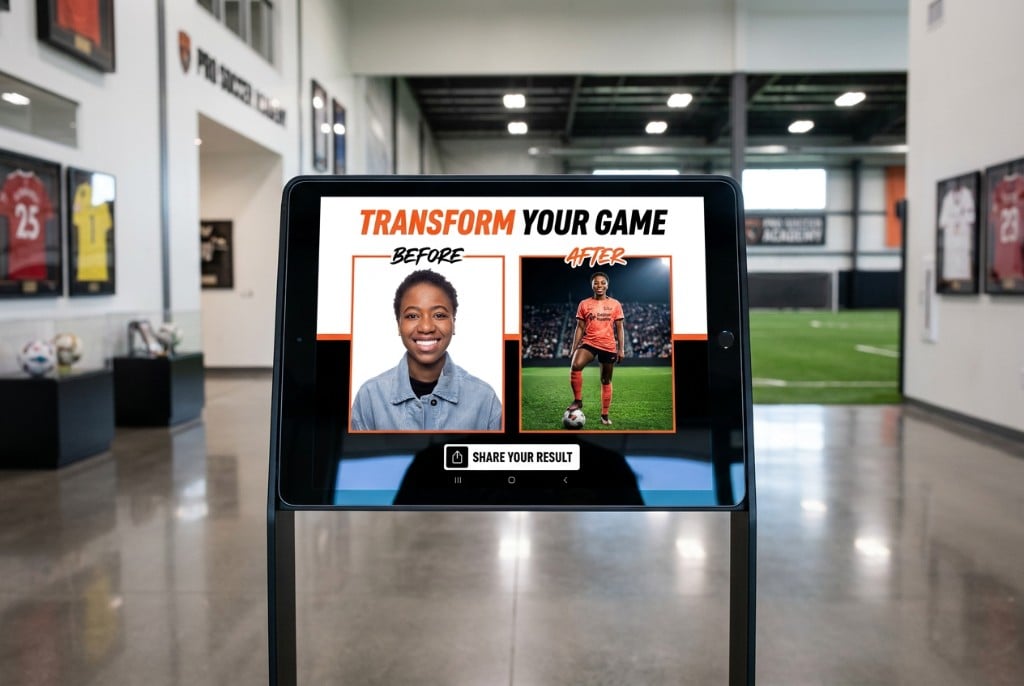
AI-driven photo and video experiences change that math. Not because "AI" is on the signage, but because the output is genuinely worth a fan's time — a shot of them in the team kit, on the field, on the jumbotron, on a collectible card with their own name on it — and because every one of those moments is a tracked, sponsor-attributable interaction.
Here is how venues are actually putting them to work.
Start with the concourse, not the field
The field is spoken for. The concourse is not, and it is where fans spend the most unstructured time.
A concourse activation has to survive three constraints that a corporate ballroom never imposes: crowds arrive in violent surges tied to the game clock, dwell time is measured in minutes, and floor space is leased by the square foot. An experience that takes four minutes per guest will build a line that becomes a fire-marshal problem by the second quarter.
That is why throughput is the first design decision, not an afterthought. Our AI Photo Booth tops out at 180 photos per hour from a single equipment set on the fastest configuration, and fits a standard 8'x8'x8' footprint — with a slim 2'x2'x7' variant for concourses where you genuinely cannot spare the square footage.
When even that is too much, the Roaming Photo Booth removes the footprint problem entirely. A handheld rig works the concourse, the club level, and the supporter sections with zero floor space and no queue at all — the camera goes to the fans rather than asking a crowd in motion to stop and form a line.
Get fans on the jumbotron
The single most reliable way to make a stadium activation feel essential rather than optional is to close the loop on the big screen.
Our Slideshow enhancement pushes captures to a live, looping display in real time — at the kiosk, on concourse monitors, on a marquee, on the videoboard. A fan takes a photo on the concourse, walks to their seat, and sees themselves forty feet tall during a TV timeout.
The behavioural effect is immediate and self-reinforcing. The first fan on the board is a novelty. By the second period, the line for the booth is made up of people who saw someone else up there and want their turn. You are no longer marketing the activation; the videoboard is doing it every stoppage.
A few things make this work in a real venue rather than a pitch deck:
- Moderation is not optional. Every venue needs an approval step between capture and broadcast. Build the queue with a human gate.
- Match the aspect ratio to the board. Videoboards are rarely 16:9. Design the output template for the actual hardware, or you will letterbox your sponsor's logo into irrelevance.
- Decide the cadence with broadcast. Fan content competes with sponsor reads and replays. Agree the slots before the season, not on game day.
Give fans something they cannot screenshot
Anyone can take a selfie at a game. The activations that earn a line produce something a phone camera cannot.
Put fans somewhere they will never actually stand. Magic Green Screen uses AI background removal to drop guests into any scene without a chroma wall — center circle, the tunnel, the podium, a championship parade, last season's title celebration. In a concourse with ordinary lighting and no room for a set, that is the difference between a real activation and a bedsheet taped to a wall.
Make them the highlight reel. The Slow Motion Glambot turns a walk-up into a broadcast-grade cinematic moment, and the 360 Video Booth captures the kind of orbit shot fans associate with player introductions. Both produce vertical video that goes straight to social without editing.
Turn them into the team. AI Video Booth transforms a still capture into short-form motion content — the fan bursting through a banner, arriving in team colors, entering the stadium as though they were announced.
Trading cards are the sports-native format
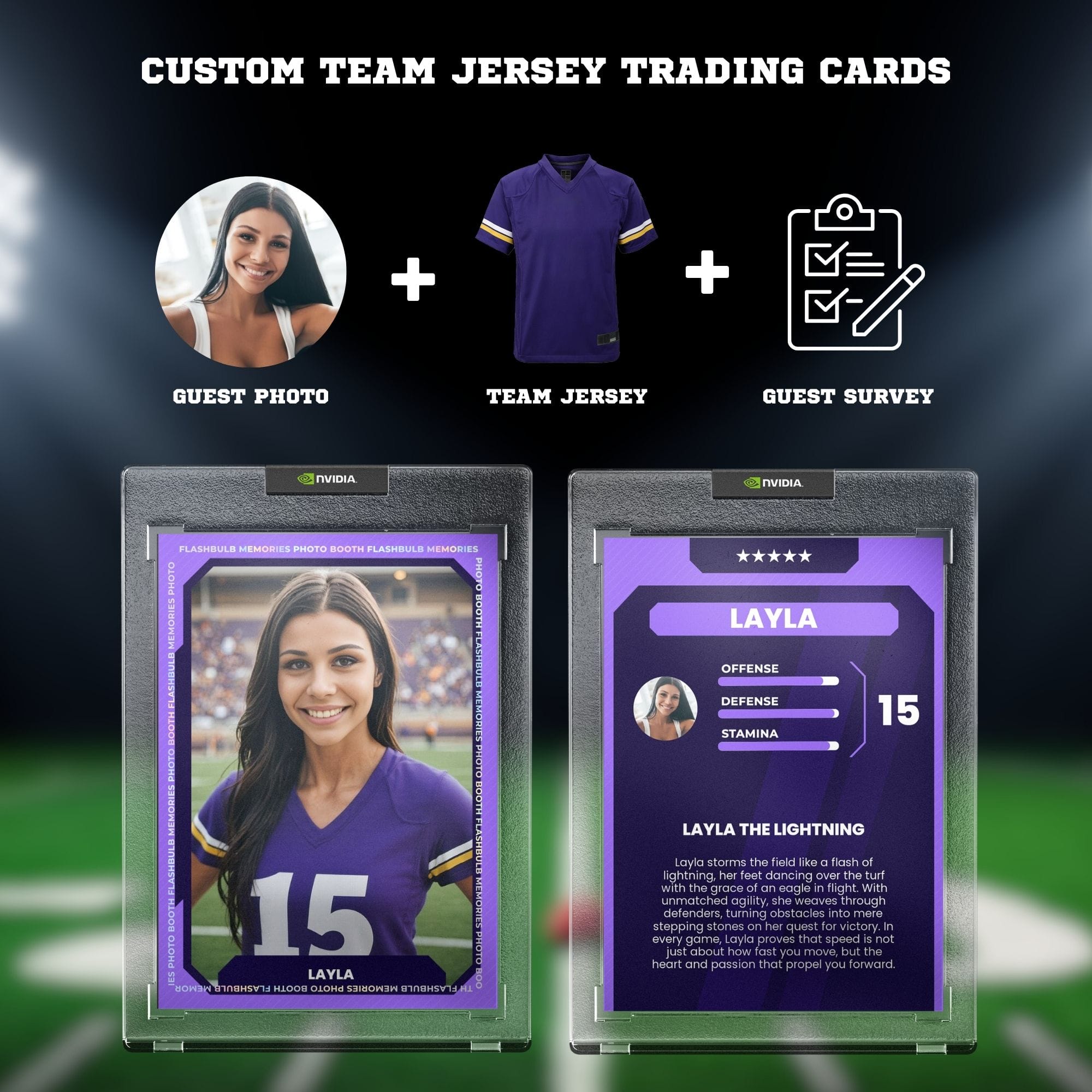
Of everything we build, AI Trading Cards are the experience most obviously at home at a sporting event, because the format already belongs to the sport.
A fan steps up, gets carded like a rostered player — their name, their photo in team kit, stats on the back that you define. It can be their season-ticket tenure, their section, the number of games attended, a sponsor's stat line, or something purely for fun. Output goes out digitally and, with printing added, as a physical collector-style card they keep in a wallet for a decade.
That last part matters more than it sounds. Most event photo output is consumed once and buried in a camera roll. A printed card with someone's name on it is one of the few branded objects a fan will voluntarily keep, and every one of them carries your sponsor's mark.
Cards fit an 8'x8' footprint (10'x10' preferred for queue flow), and the workflow is built for high event volume with queue-friendly capture and cloud-assisted processing.
Reach the fans who are not in the building
This is the piece most venue activations skip entirely, and it is the one with the largest addressable audience. For every fan in the seats there are many more watching at home, at a bar, or in another country.
The Virtual Booth is a browser-first activation that fans open on their own device, wherever they are. No app, no download, no booth. Branded frames, instant sharing, and a live gallery — the same output as the in-venue experience, delivered to the away supporters, the alumni network, and the broadcast audience simultaneously.
Two properties make this genuinely useful for sport rather than a consolation prize:
- It scales with audience, not with hardware. Participants capture in parallel on their own phones, so there is no queue and no ceiling tied to how many kiosks you rented. Unlimited participants across time zones.
- It runs hybrid. Use it as the remote arm of an in-venue activation and both audiences land in the same gallery, under the same sponsor branding, feeding the same videoboard slideshow. A fan in another country can end up on the board at your stadium.
Make it measurable, or it will not get renewed
Fan-experience budgets get cut when they cannot be defended. Sponsorship budgets get renewed when they can.
The Analytics & Data Collection enhancement captures guest insights and engagement data, and with Custom Microsites every share lands on a branded destination you control instead of a generic gallery. The reporting that comes back after the event answers the questions a sponsor actually asks:
- How many fans participated, and when did the peaks hit relative to the game clock?
- How many opted in, and what did they consent to?
- How many shares went out, to which platforms, and how many views came back?
- Which activation, in which concourse location, outperformed the others?
For venues running a season rather than a one-off, Custom APIs let that data flow into the systems you already run — CRM, ticketing, loyalty — so a game-day capture becomes a known fan record rather than an orphaned photo. If the activation is a permanent fixture, Permanent Installations turn it into a fixed asset that runs every event without a re-rental.
What to sort out before game day
Venue activations fail on logistics far more often than on creative. A short list of what to settle early:
- Power and connectivity. Most setups need one dedicated standard outlet within 15 feet. Aim for 5 Mbps up and down minimum; stadium wifi at capacity is a genuine risk, and cellular fallback should be arranged rather than assumed.
- Location against the game clock. Pre-gate, concourse, club level, and fan fest all behave differently. Surge patterns should drive placement.
- Approvals and rights. Team marks, player likeness, league restrictions on AI-generated imagery, and videoboard content policies all take longer than the build.
- Moderation and consent. Who approves board content, and what fans are agreeing to when they opt into sharing.
- Sponsor integration. Which logo goes where, on the frame, the microsite, the card back, and the email.
- Lead time. Book at least several weeks out for standard configurations, and a couple of months for custom scene libraries, branded environments, and bespoke card templates. (We book up to a year or more in advance, so if it's a big game, the sooner the better.)
Where this fits
If you run a venue, a team's marketing group, or a sponsorship agency, the useful framing is not "should we get a photo booth." It is: which minutes of the fan journey are currently dead, and what would make them worth something to both the fan and the sponsor?
Concourse dwell time before kickoff. The intermission. The pre-gate fan fest. The watch party three time zones away. Each of those is a slot where a well-built activation earns its line item — provided the output is good enough that fans want it, and the data is good enough that sponsors renew it.
We build these for brand activations, corporate events, and university events including gameday programs, and we work in markets with dense sporting calendars — Phoenix, Atlanta, Miami, Chicago, Los Angeles, and Las Vegas among them.
Planning a season or a single event?
Tell us the venue, the dates, and what you need the activation to prove. We will come back with an approach, a footprint, and a realistic throughput estimate for your concourse.
Get a Quote